Competition for innovative thoughts on these topics initiated by the Commission:
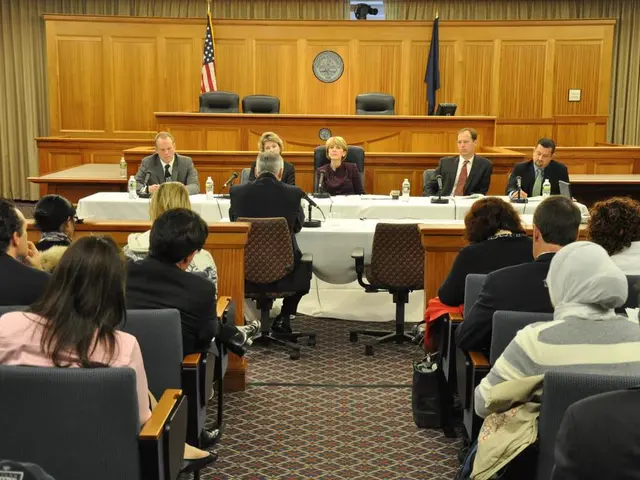
In a bid to address the challenges and opportunities presented by Artificial Intelligence (AI) in the justice system, an annual ideas competition has been proposed for the North Rhine-Westphalian (NRW) justice administration. The competition, championed by SPD state parliamentarian Sonja Bongers, aims to be a continuous process, fostering innovation in the use of AI and encouraging the exchange of ideas and experiences among experts and practitioners.
The competition is designed to leverage AI to improve efficiency in the justice system, particularly in key areas such as case management, judicial workflows, and client intake. AI platforms are expected to help judges reduce time spent on case preparation by facilitating quicker access to and analysis of deposition and hearing testimonies, leading to faster, fairer, and more accessible justice outcomes.
AI tools like the Court Diversion Eligibility Screener are designed to automate preliminary case assessments, streamlining the management and diversion of civil cases. This not only preserves judicial resources but also reduces delays, improving court efficiency and outcomes for litigants.
Back-office automation through AI applications is also expected to reduce routine staff workload, enhancing internal court operations. AI-enabled chatbots and legal problem diagnosis tools support client intake, helping more people navigate the justice system effectively.
The competition also emphasizes the importance of examining how AI can alleviate the emerging shortage of skilled workers in the justice system. AI-driven technologies can help manage staffing pressures and backlogs, contributing to operational efficiency while managing risks related to bias, oversight, and privacy.
While no direct details about the AI Ideas Competition for NRW Justice appear in the search results, the described AI-driven efficiency improvements align with typical innovation goals in judicial AI competitions. These competitions often seek solutions to reduce delays, automate case triage, enhance data access, and improve procedural fairness through technology.
The AI Ideas Competition for NRW Justice, if successful, could serve as a platform for exchanging the latest AI innovations and making decisions about useful AI technologies for the NRW justice administration. Bongers encourages experts and practitioners to contribute their experience in the development of AI, emphasizing the need for immediate political action regarding AI.
The possibilities in the field of Artificial Intelligence are rapidly developing, offering opportunities but also presenting challenges and risks. The AI Ideas Competition for NRW Justice is a significant step towards harnessing these possibilities to improve the efficiency and effectiveness of the justice system in North Rhine-Westphalia.
[1] 2023 Year-End Report on the Federal Judiciary [2] Court Diversion Eligibility Screener [3] [Article on AI and the Justice System] [4] [Article on Virtual Court Hearings]
- The AI Ideas Competition for NRW Justice aims to foster innovation in the use of artificial intelligence and encourage the exchange of ideas among experts and practitioners to improve the efficiency of the North Rhine-Westphalian justice system.
- Artificial intelligence tools, such as the Court Diversion Eligibility Screener, are designed to automate preliminary case assessments, streamlining the management and diversion of civil cases, whereas AI-enabled chatbots and legal problem diagnosis tools support client intake, helping more individuals navigate the justice system effectively.
- The competition emphasizes the importance of examining how artificial intelligence can alleviate the emerging shortage of skilled workers in the justice system and the need for immediate political action regarding AI to ensure the responsible use of technology in politics, general news, education and self-development, and the broader context of the justice system.